
— Architects & project leads
The central vacuum,
designed in from the start.
For an architect, the right moment to plan a central vacuum is on the drawing board. Integrated from the design stage, the duct network disappears into partitions, slabs and service voids: no visible equipment, no retrofitting later. AspiWall supports architecture firms in offering their clients an invisible, durable solution that adds value to the project.
— The project lead's reflex
Added value
to offer the client.
Planning a central vacuum from the design stage offers the client a comfort they will no longer be able to integrate as cleanly once the finishes are in place. It is also a concrete way to differentiate your project.
When the network is drawn from the design phase, the ducts run naturally through partitions, slabs and service voids, and the central unit takes its place in a room planned for it. The result is invisible: only the inlets are flush with the walls. AspiWall acts as the architecture firm's technical partner, sizes the installation from your plans and coordinates with the site. Discover our approach for professional buildings and our range.
An invisible
solution
- Network built into the structure, invisible once the works are done
- A concrete added value to offer your clients
- Study and sizing from your plans
- Coordination with the site from the second-fix stage
- A single technical partner, from plan to commissioning
— Integration from the design stage
Drawing the network
with your plans.
New build or major renovation: the best moment to integrate a central vacuum is the design phase, when the duct routing can still be planned alongside the other technical networks.
AspiWall studies your plans, proposes a duct routing consistent with your project, sizes the central unit and defines the location of the inlets and the utility room. We work in coordination with your other trades, without adding to your design workload.
TO INTEGRATE INTO THE PLANS
From plan to site
- Duct routing planned with the technical networks
- Utility room dedicated to the central unit planned on the drawing
- Inlet locations validated with the client
- Coordination with the second-fix trades
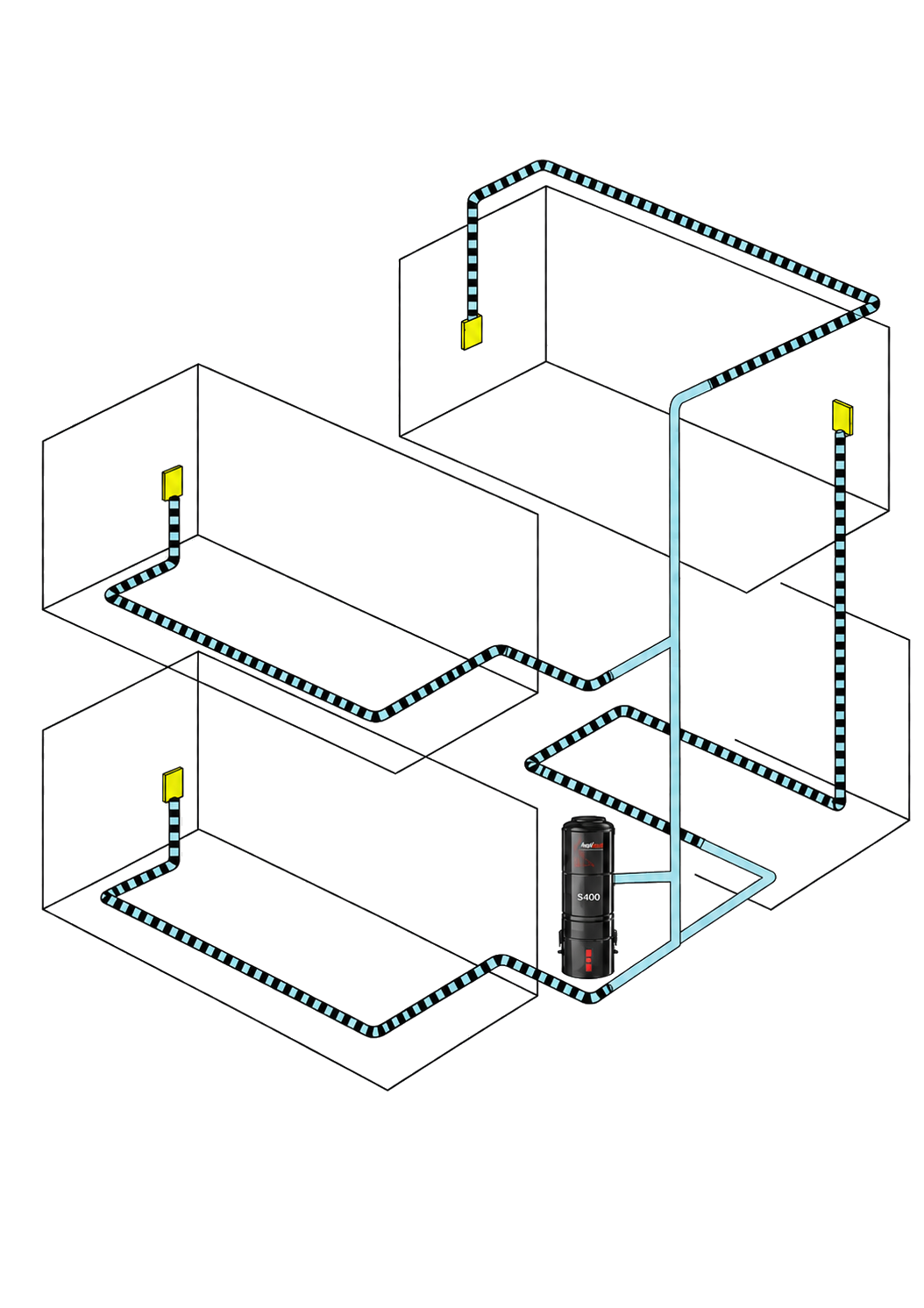
AspiWall network · design and installation to plan, throughout Belgium
— Standard vacuum vs central vacuum
Where does
the air go?
A standard vacuum, a robot or a stick vacuum filters part of the dust but blows the air back into the room where it runs. With an AspiWall central vacuum, the dirt is sent to the central unit and the vacuumed air is expelled out of the living areas or out of the occupied zones, which limits the re-suspension of fine dust. That is what makes the difference in buildings open to the public and places sensitive to dust.
— Made by Trovac
A benchmark for
air quality.
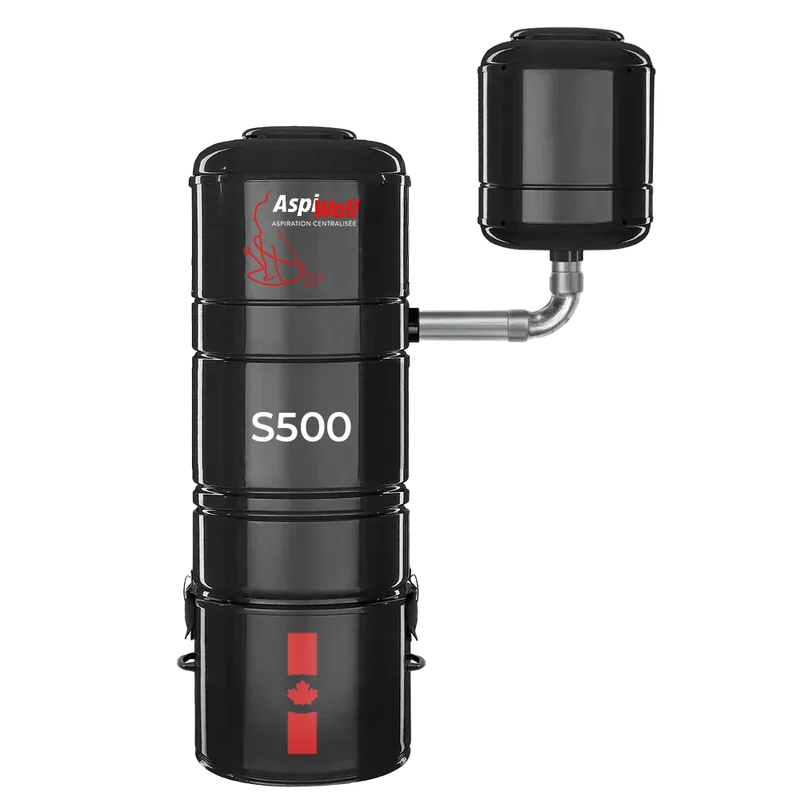
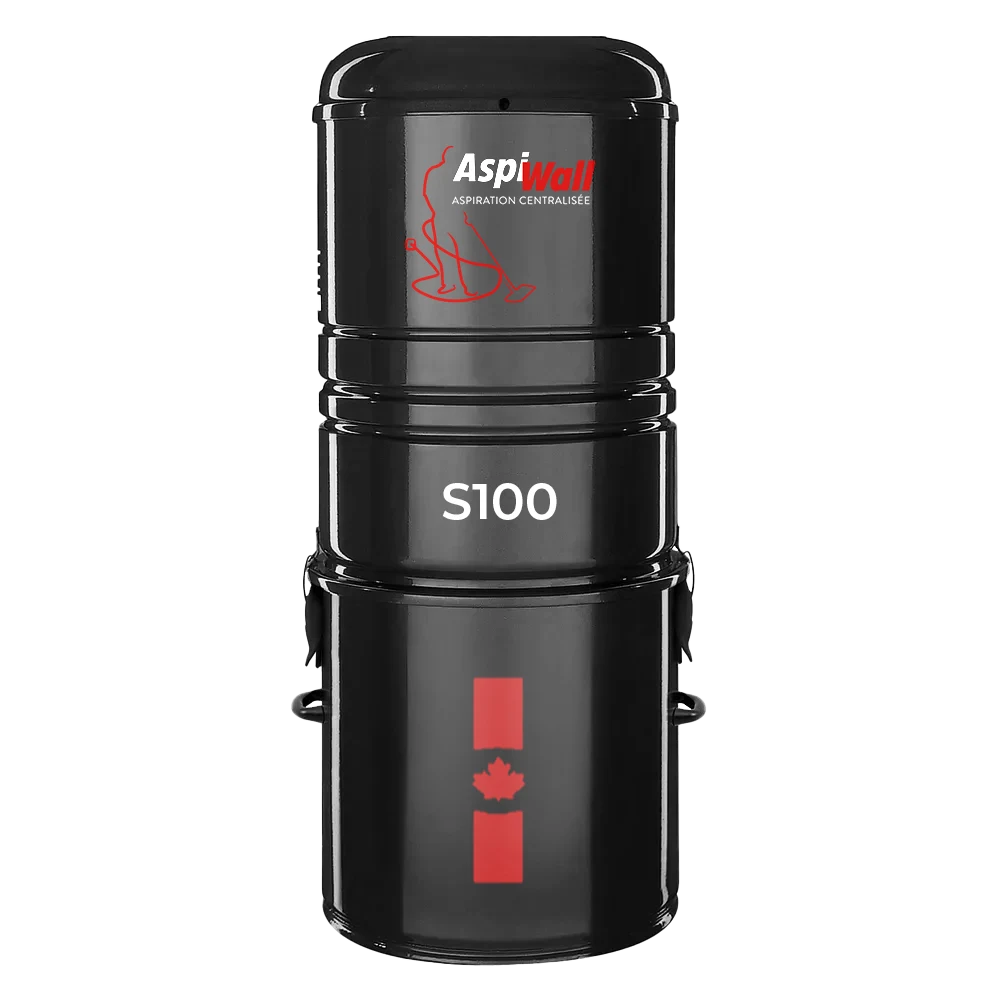
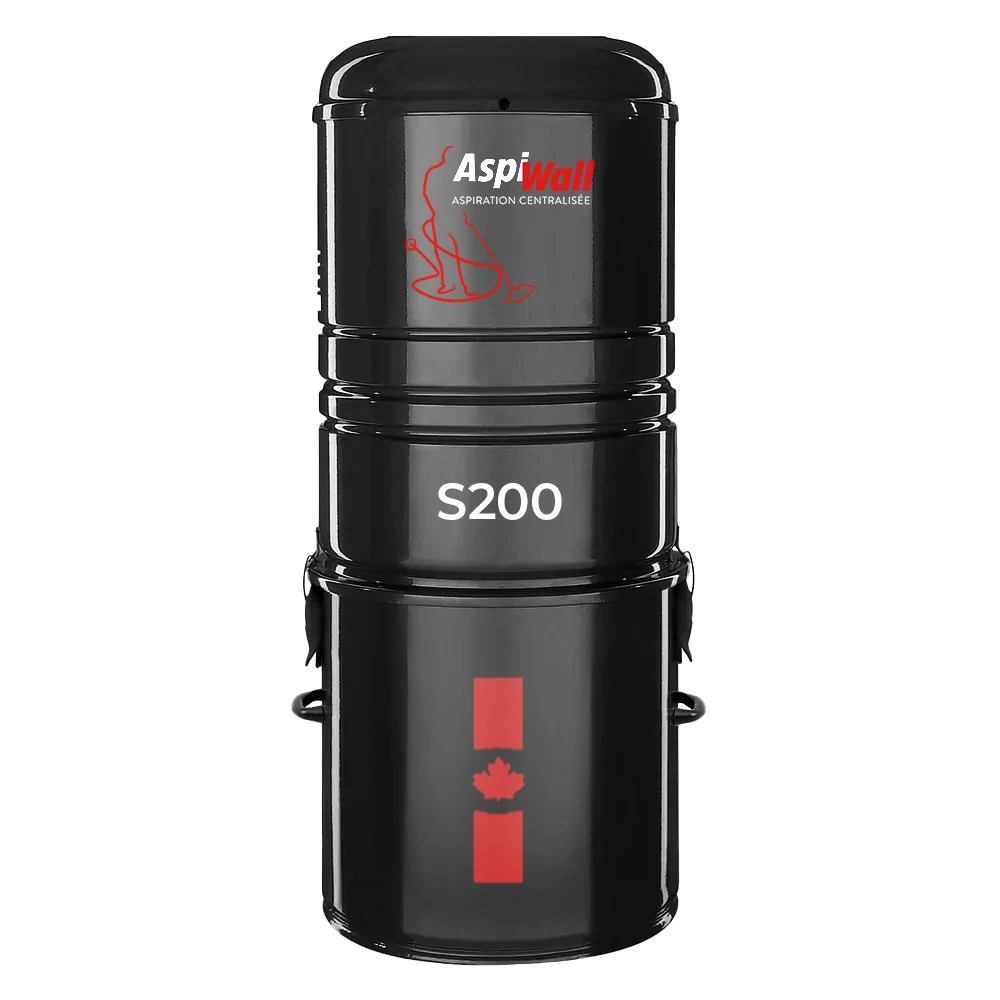
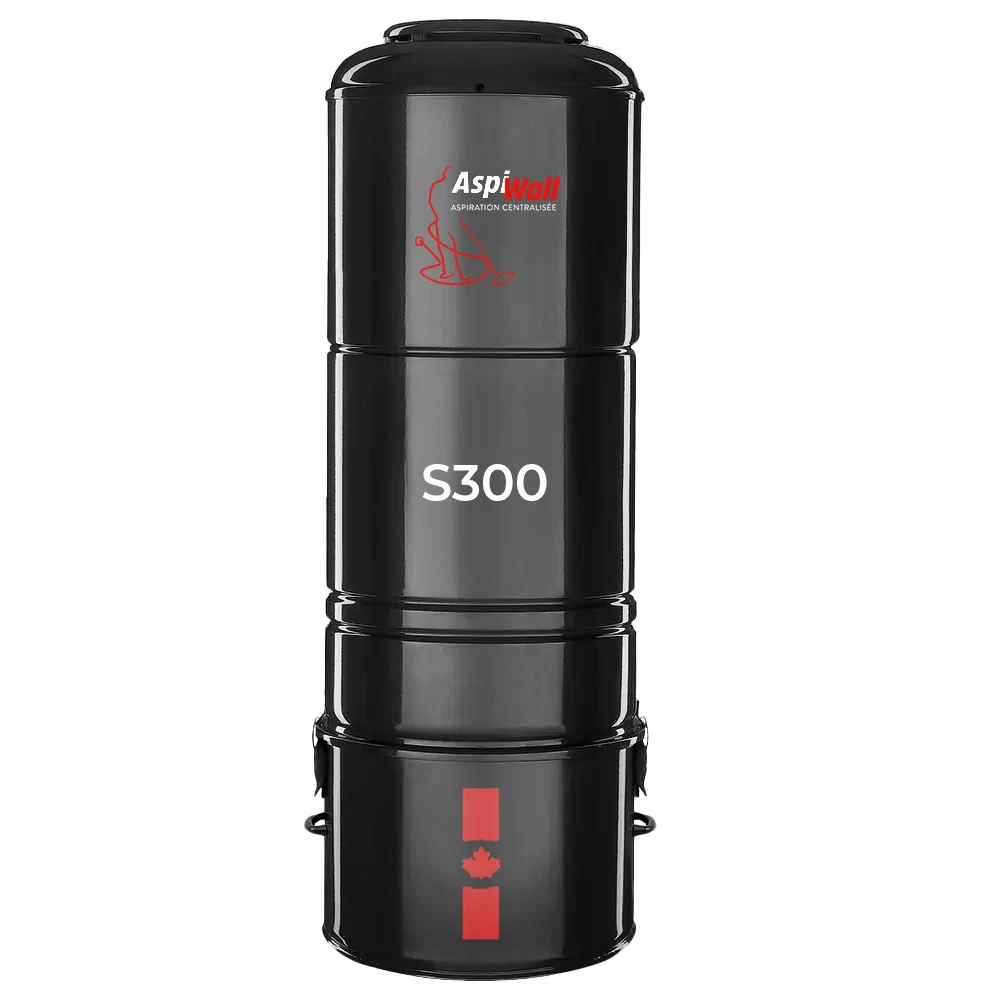
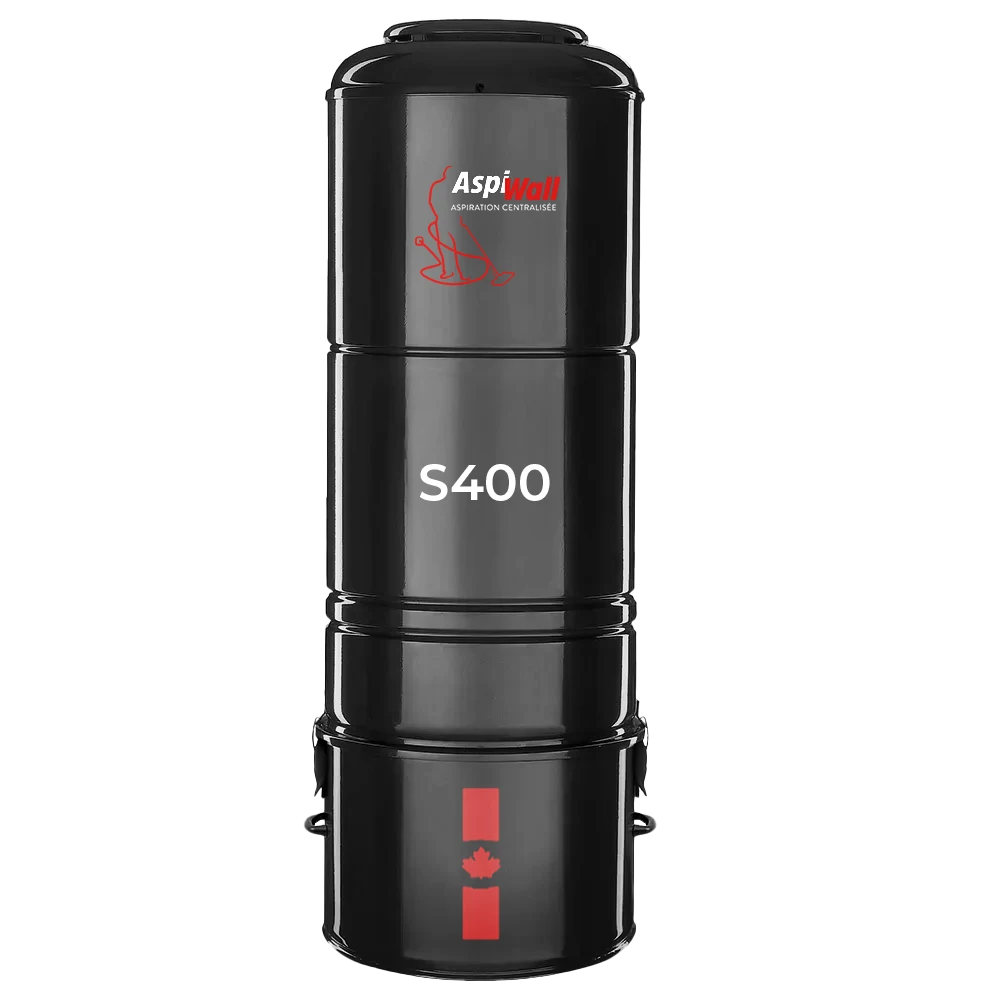
AspiWall offers central units in Belgium made by Trovac, among other manufacturers. Trovac's central vacuum system has been distinguished by AFPRAL (the French Association for Allergy Prevention) since July 2014. An important reference for buildings where air quality, dust, dust mites and allergens are sensitive matters.
— Frequently asked questions
Your questions.
Our answers.
Why plan a central vacuum from the design stage?
Because the duct network then integrates naturally into partitions, slabs and service voids, with no retrofitting or chasing later. The result is completely invisible and coordination with the other networks is far simpler than with late installation.
Does AspiWall work directly with architecture firms?
Yes. AspiWall acts as a technical partner: we study your plans, propose a duct routing, size the central unit and coordinate with the site. You stay in control of the design, we bring the central-vacuum expertise.
Does the system stay invisible in the delivered project?
Yes. Once the works are done, only the vacuum inlets are flush with the walls. The ducts and the central unit are built into the structure and the utility room: no bulky equipment is visible.
Is it feasible in a renovation?
Yes, particularly in a major renovation, when partitions and floors are open. The earlier the central vacuum is integrated into the project, the simpler and more discreet the duct routing.
How do we start a collaboration?
Tell us about your projects: contact AspiWall with your plans, and we will study the integration of the central vacuum together. See also our installation page.
Are you an architect?
AspiWall supports you in integrating the central vacuum into your new-build or renovation projects. Let's talk about your projects: +32 470 71 22 22 · info@AspiWall.be