
— Central vacuum system
The integrated
vacuum
system.
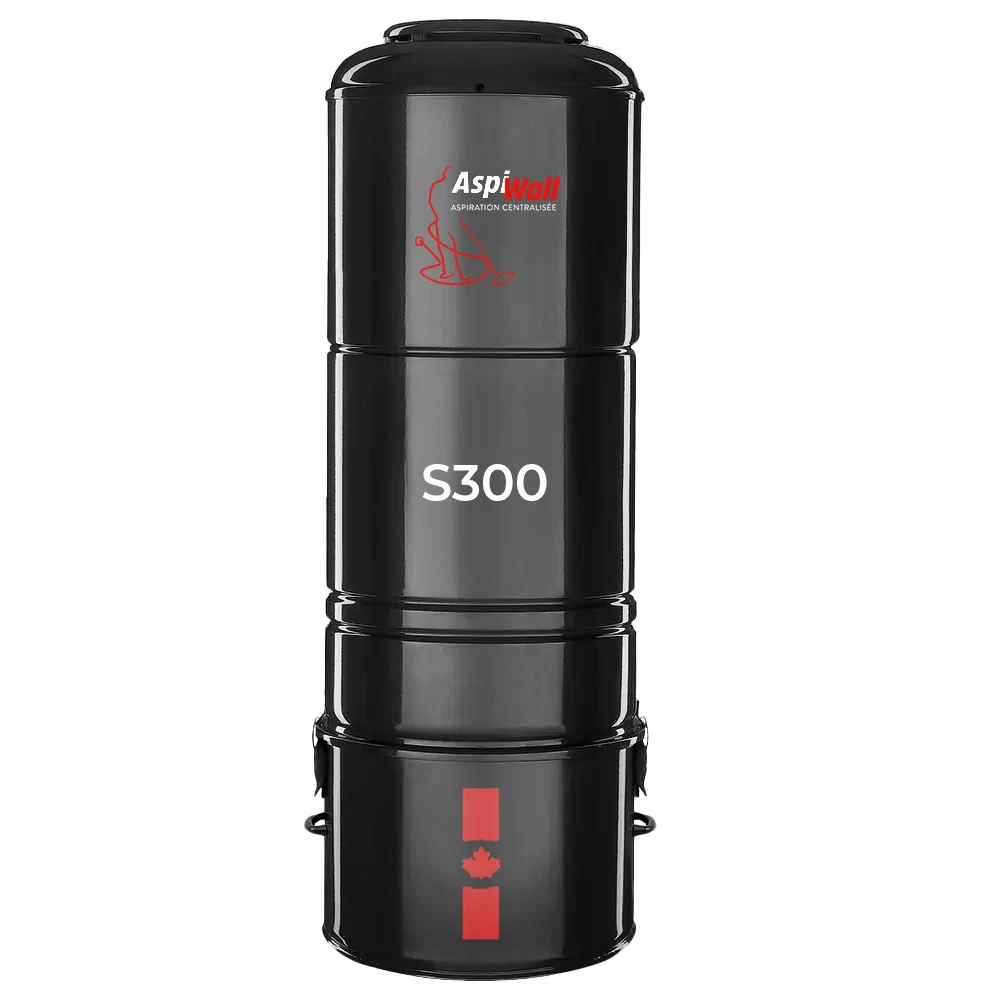
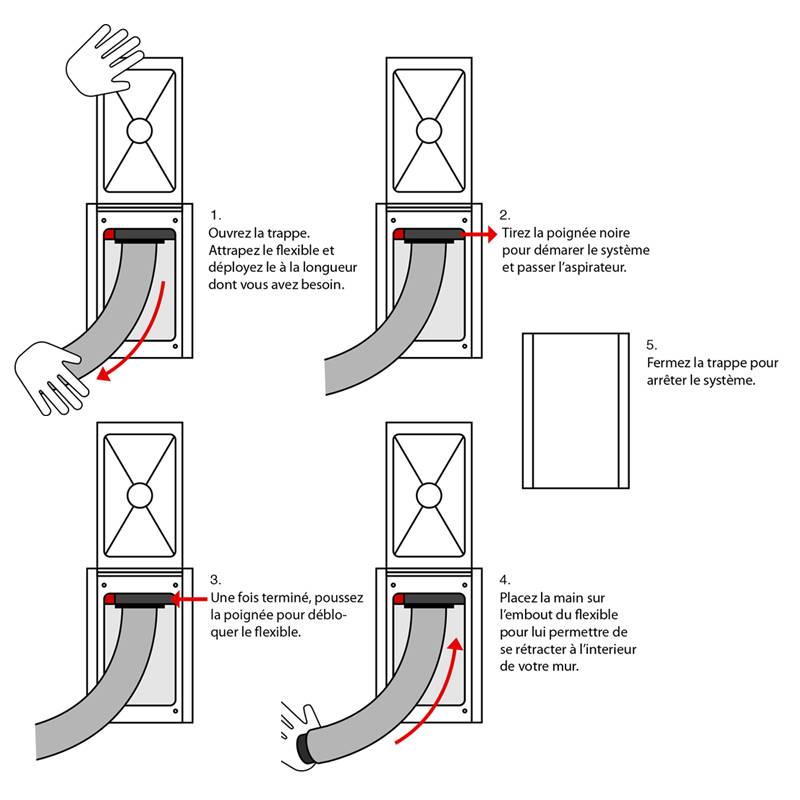
A central unit in the garage or basement, a PVC pipe network in the walls, retractable wall boxes in each room. No dust exhausted back into living areas. Total silence in living areas.
— The principle
One central unit,
wall inlets,
silence.
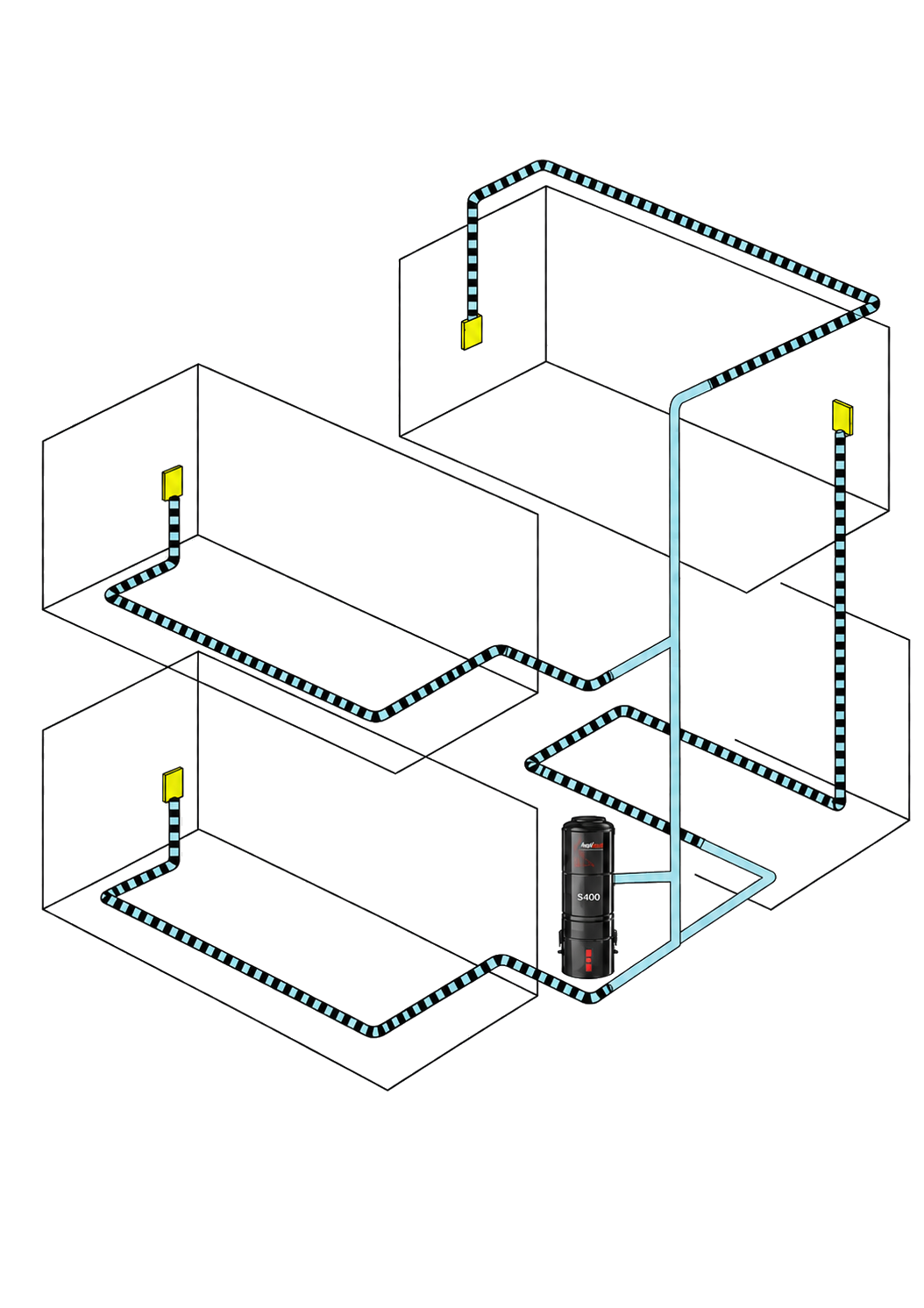
The central unit is installed in the garage, basement or utility room. A network of antistatic PVC pipes (Ø50.8 mm) runs through the walls to discreet inlets in each room. Unlike standard PVC, this material strongly reduces static electricity build-up: hair, pet hair and dust do not cling to the inner walls — the network stays clean and airflow remains constant over time. You connect a lightweight hose — suction is instant, and the vacuumed air is never blown back into your living areas: it is discharged where the central unit sits — garage, basement, utility room, ventilated crawl space or outside, depending on the installation.
The system is designed to last. The PVC network has no wear parts. Only the central unit may eventually require a central unit replacement after years of use — and AspiWall handles this, as well as technical service for all brands. Also explore the central unit range, retractable hoses, installation and indicative pricing.
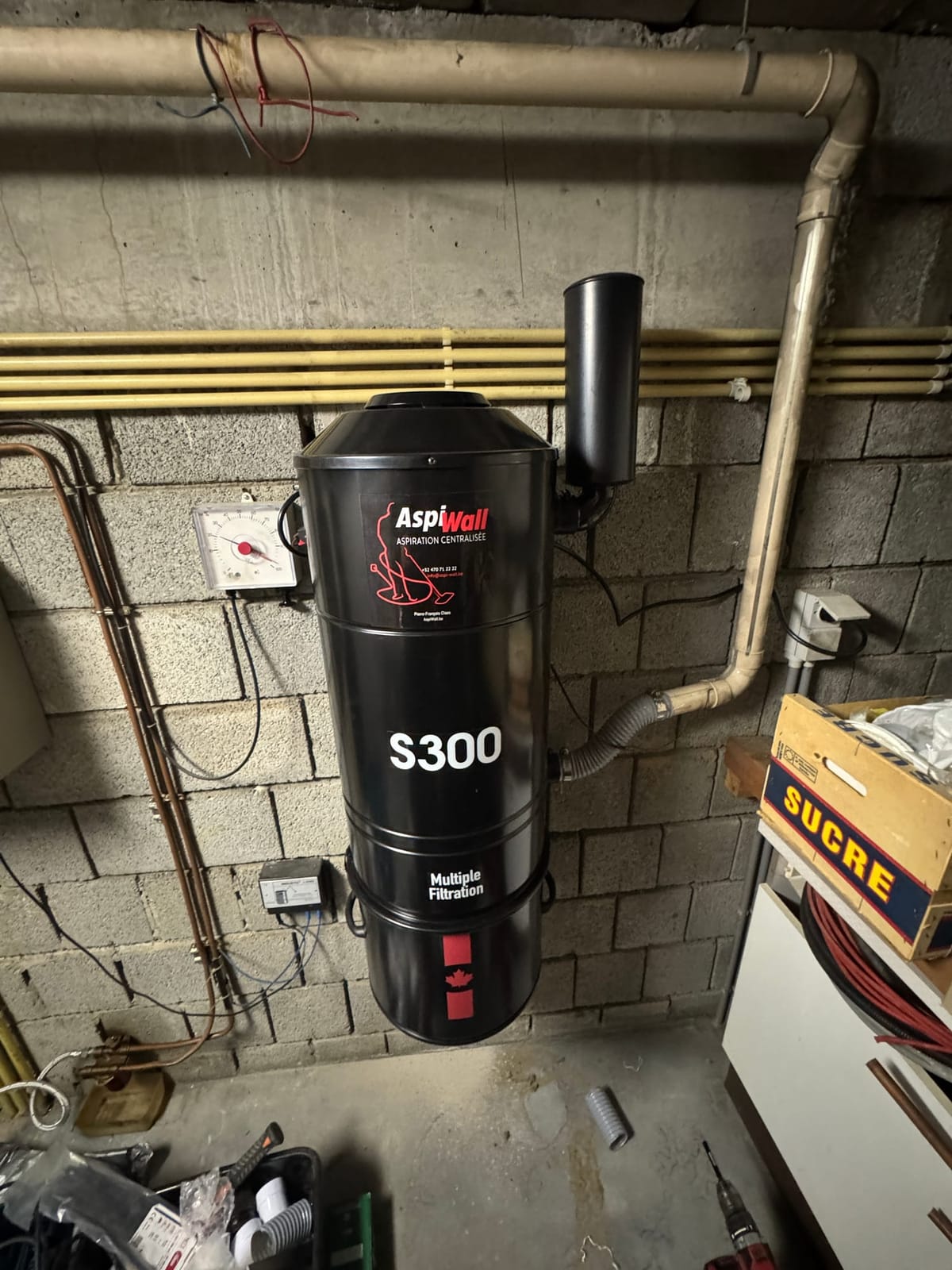
Real installation · AspiWall S300, Lasne
— Technical comparison
Central vacuum
vs. standard vacuum cleaners.
Every vacuum cleaner has to exhaust the air it draws in somewhere. With a standard vacuum, even when equipped with good filtration, this air is generally sent back into the room you just cleaned. The real question is simple: do you want to exhaust this air into your living areas, or direct it to a central unit placed outside the areas where you live, breathe and sleep?
Standard vacuum cleaners
- −Power: 280 to 300 AW on average
- −Battery or cord limiting range
- −Small bin to empty frequently
- −Noise in the living area
- −Air (and micro-particles) exhausted back into the room
- −Frequent filter maintenance
AspiWall central vacuum system
- →Power: up to 1354 AW (S500 model)
- →Hose (retractable or traditional), no cord or battery
- →Large bin in the central unit, emptied 1 to 2× per year
- →Total silence in living areas
- →Stale air discharged at the central unit, never back into living areas
- →Minimal central unit maintenance
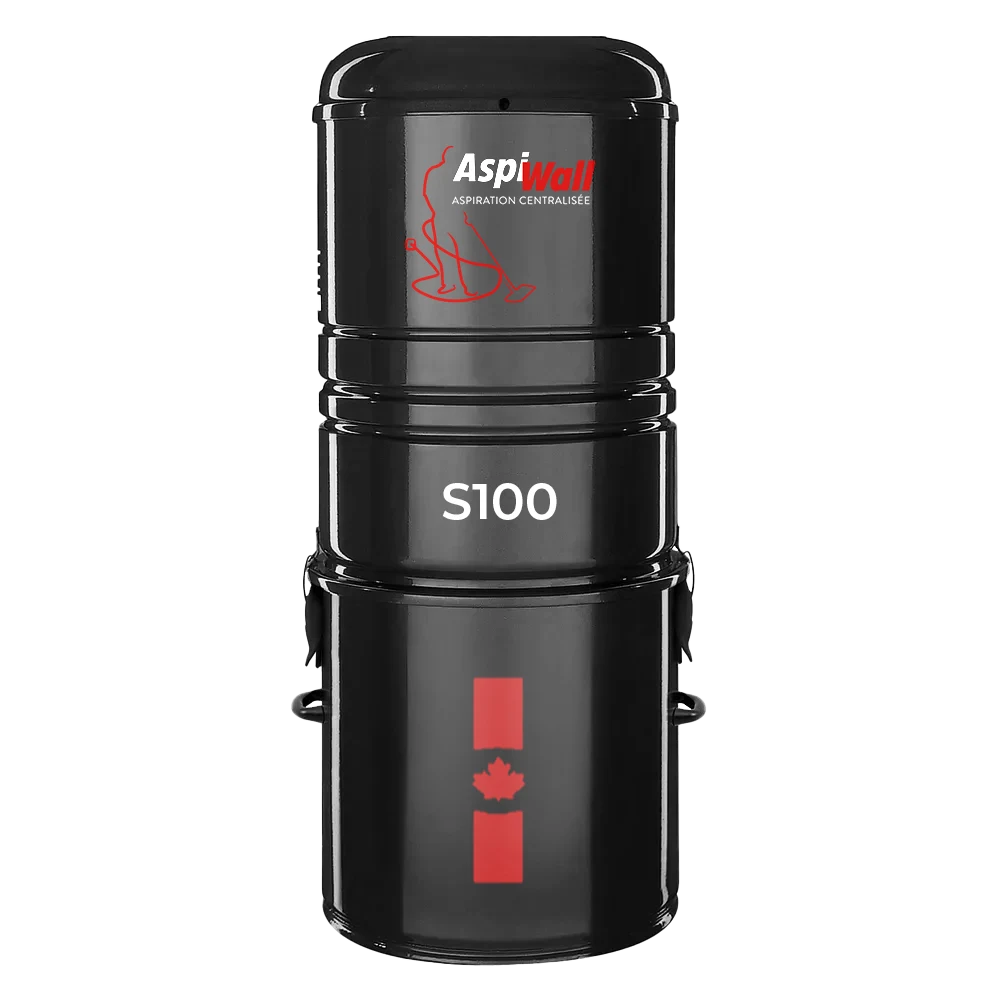 | 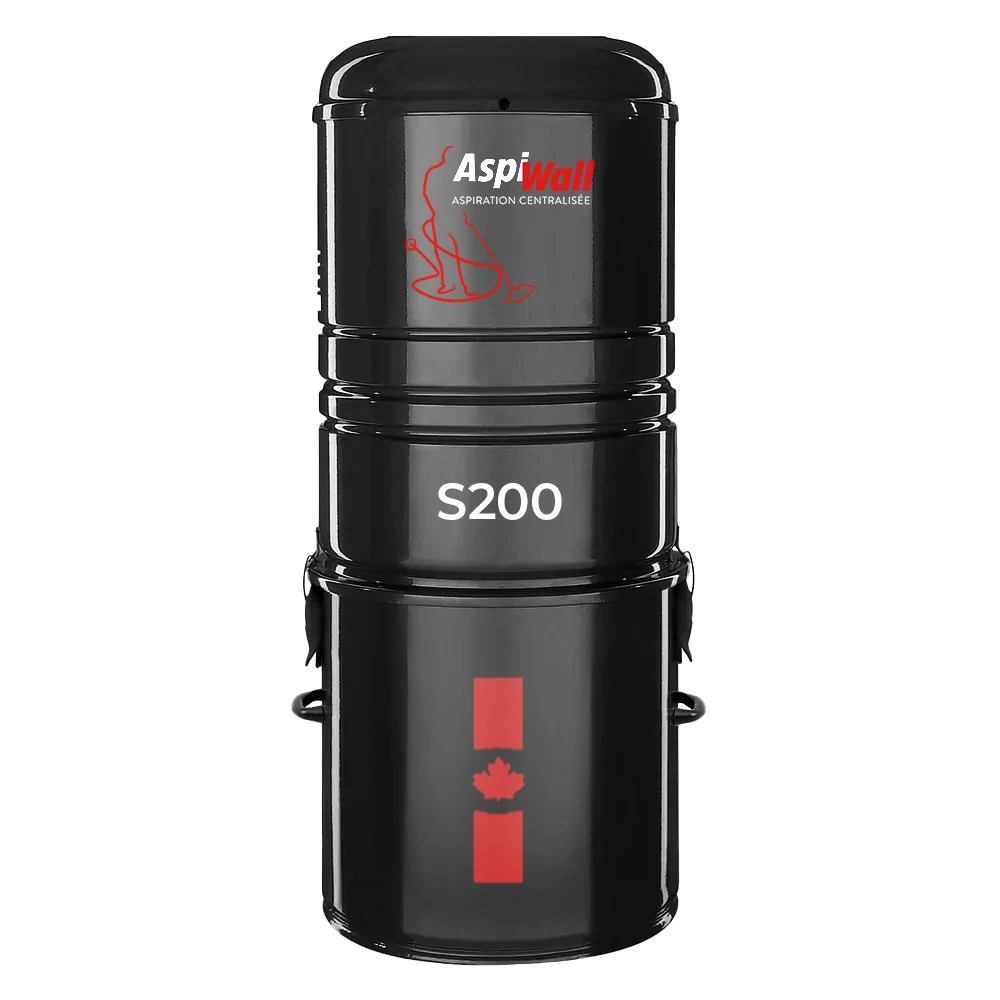 | | 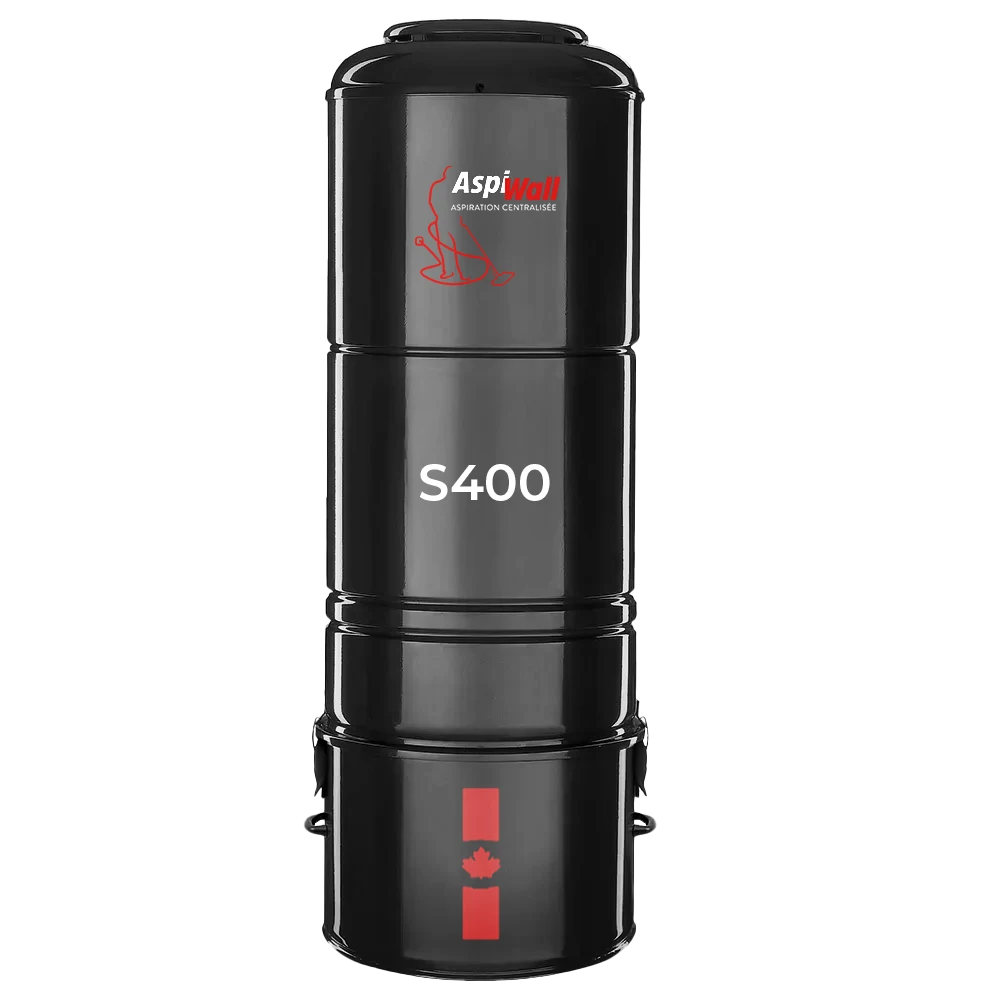 | 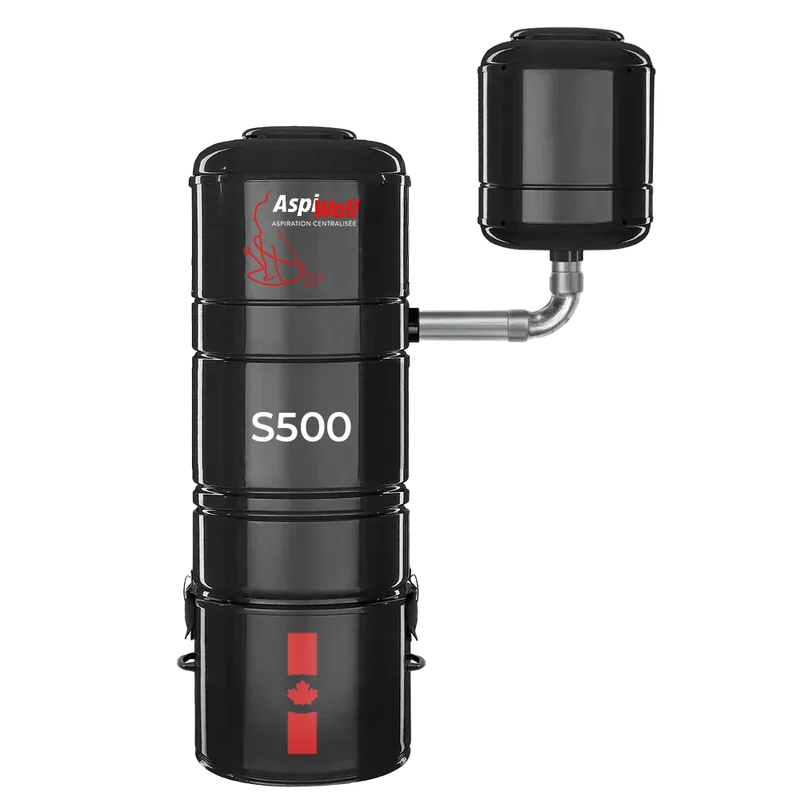 | |||
| Standard vacuum cleaners | S100 | S200 | S300 | S400 | S500 | ||
|---|---|---|---|---|---|---|---|
| Power (AW) | 280–300 | 600 | 650 | 677 | 695 | 1354 | |
| Vacuum pressure (mmH₂O) | ~1500 | 3033 | 3450 | 3790 | 4318 | 6452 | |
| Noise in room | 70–80 dB | Inaudible | Inaudible | Inaudible | Inaudible | Inaudible | |
| Air exhaust | Into the room | Away from living areas | Away from living areas | Away from living areas | Away from living areas | Away from living areas |
— Comfort, allergies and air quality
A vacuum cleaner integrated
into your building.
A real benefit for people sensitive to dust
With a central unit placed outside the living areas, a central vacuum system limits the re-suspension of fine dust in the home. Particularly suitable for people sensitive to dust, mites or domestic allergens.
Exhaust air that does not return to your rooms
Every vacuum cleaner has to exhaust the air it draws in somewhere. With AspiWall, this air is directed to a central unit placed outside the living areas: garage, basement, utility room or other separate area — not sent back directly into the space you have just cleaned.
Breathe elsewhere than in the air you just vacuumed
True comfort also means not sending the exhaust air back into the rooms where you live, sleep, work or spend time with loved ones. AspiWall is built on this simple and consistent logic.
— Install yourself
The vast majority
of customers
install themselves.
AspiWall is above all a technical partner to make central vacuum systems accessible in kit form. Professional equipment, plan-based advice, support and optional post-installation check: you remain in control of your project.
Installation requires planning, but it is not reserved for professionals. With the right components, clear instructions and a coherent plan, many customers complete their own installation. AspiWall also offers full installation for those who prefer it.
- →Kit packs — professional equipment
- →Plan-based advice included
- →Technical support available
- →Install at your own pace
- →Post-installation check available
- →Leak test available
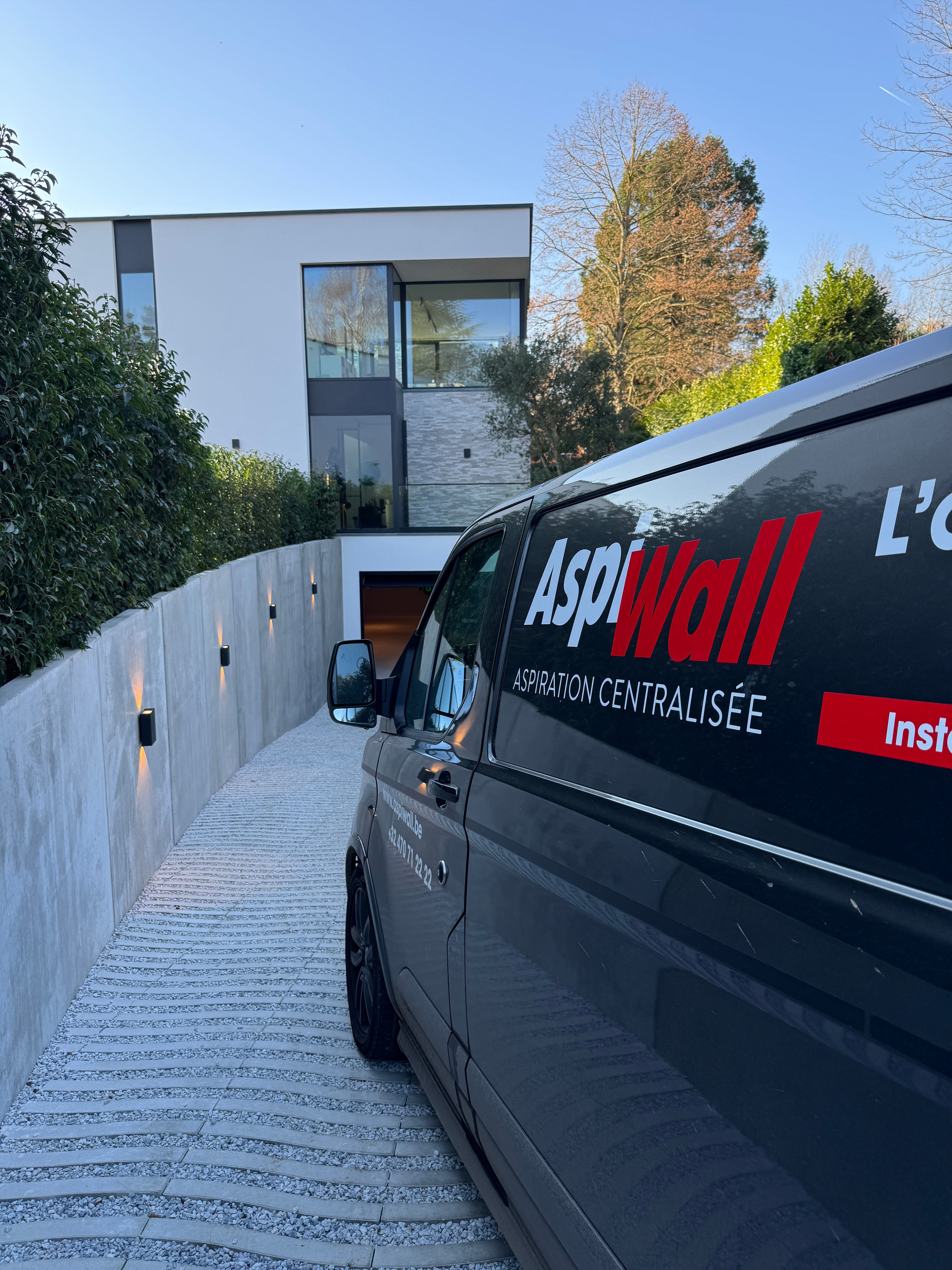
AspiWall · At home, throughout Belgium
— Frequently asked questions
Your questions. Our answers.
What is a central vacuum system?
A central vacuum system is integrated into the building. A central vacuum unit is installed in a utility room (garage, basement, laundry room). A network of PVC pipes runs through the walls and feeds inlets distributed throughout the rooms. You connect a lightweight hose to the inlet, and the power of the central unit vacuums up the dust, and the air is discharged where the central unit sits — garage, basement, utility room, ventilated crawl space or outside, depending on the installation. No air is discharged back into the living area.
Is a central vacuum system really quiet?
The central unit is installed in a utility room away from the living areas (garage, basement, laundry room). The motor noise remains confined to that space. In the living areas, you only hear the sound of air flowing in the hose — a very low noise level compared to a standard vacuum.
Is it suitable for renovation?
Yes. The PVC network can be installed in a renovation by routing through the loft, suspended ceilings, service ducts or skirting boards. AspiWall carries out an on-site or plan-based study to optimise the pipe route and minimise building work.
What is the difference with a standard vacuum cleaner?
A standard vacuum cleaner sucks in, filters, and then exhausts the air back into the room where it is being used. Even with good filtration, this air has to come out somewhere. With AspiWall, the exhaust air is sent to a central unit installed outside the living areas. The real difference is not just power: it is also where the exhaust air goes.
What is AFPRAL?
AFPRAL is the French Association for the Prevention of Allergies (afpral.fr). It informs, supports and advises the public on allergies and their consequences. AspiWall is not officially certified or recommended by AFPRAL, but our approach is consistent with concerns relating to dust, mites, domestic allergens and indoor air quality.
Is a central vacuum system beneficial for people with allergies?
Yes. A central vacuum system is particularly relevant for people sensitive to dust, mites or domestic allergens. Every vacuum cleaner exhausts the air somewhere. The difference is where. With a standard vacuum, even filtered, the air generally returns to the room. With AspiWall, the central unit is installed outside the living areas: garage, basement, utility room or separate zone. This helps limit the re-suspension of fine dust in the home. This logic is consistent with general concerns about allergies and indoor air quality, topics on which organisations such as AFPRAL raise public awareness.
Does a central vacuum system exhaust dust back into the room?
No. The principle of a central vacuum system is precisely different from a standard vacuum cleaner. The central unit is placed in a garage, basement, utility room or separate area. The exhaust air therefore does not return directly to the room you are cleaning, which limits the re-suspension of fine dust in your living areas.
Is a central vacuum system useful in a shop or professional building?
Yes. In a shop, office, showroom or public space, a central vacuum system allows cleaning without exhausting the air directly into areas frequented by customers, staff or visitors. The central unit can be placed in a utility room, storeroom or separate area, improving comfort and limiting the recirculation of dust in work spaces.
Ready to switch to a central vacuum system?
Send your plans to receive a tailored kit and advice from a Belgian specialist. You install, AspiWall guides you.