
— Installation by AspiWall
Complete
installation
by AspiWall.
On-site and plan-based study. Network, central unit and hoses installed. Commissioning, and everything works.
AspiWall takes charge of the complete installation: on-site and plan-based study, careful PVC network installation, retractable hoses, central unit and commissioning. A prior technical visit is planned for installation projects.
— Three contexts
New build,
renovation,
professional building.
New construction
The ideal time to integrate a central vacuum system. The PVC network is installed before finishing, directly in the walls. AspiWall visits and works from your architect's or contractor's plans to optimise the pipe routing and inlet positioning.
Major renovation
Installation by AspiWall is possible during a renovation involving wall opening or access to loft spaces, suspended ceilings and service ducts. AspiWall visits to assess feasibility and carry out an on-site and plan-based study depending on the building configuration.
Professional building
Offices, medical practices, hair salons, hotels, funeral homes: central vacuum systems adapt to professional constraints. The R-Flex (no textile) is recommended by default for hygiene and ease of maintenance.
— The installation process
Study, installation,
commissioning.
AspiWall accompanies you from A to Z: on-site and plan-based study, choice of the appropriate central unit, installation of the PVC network, inlets and retractable hoses, commissioning and complete explanation. The central unit mounting can be carried out by the customer or taken care of by AspiWall — according to your preference. See the indicative pricing.
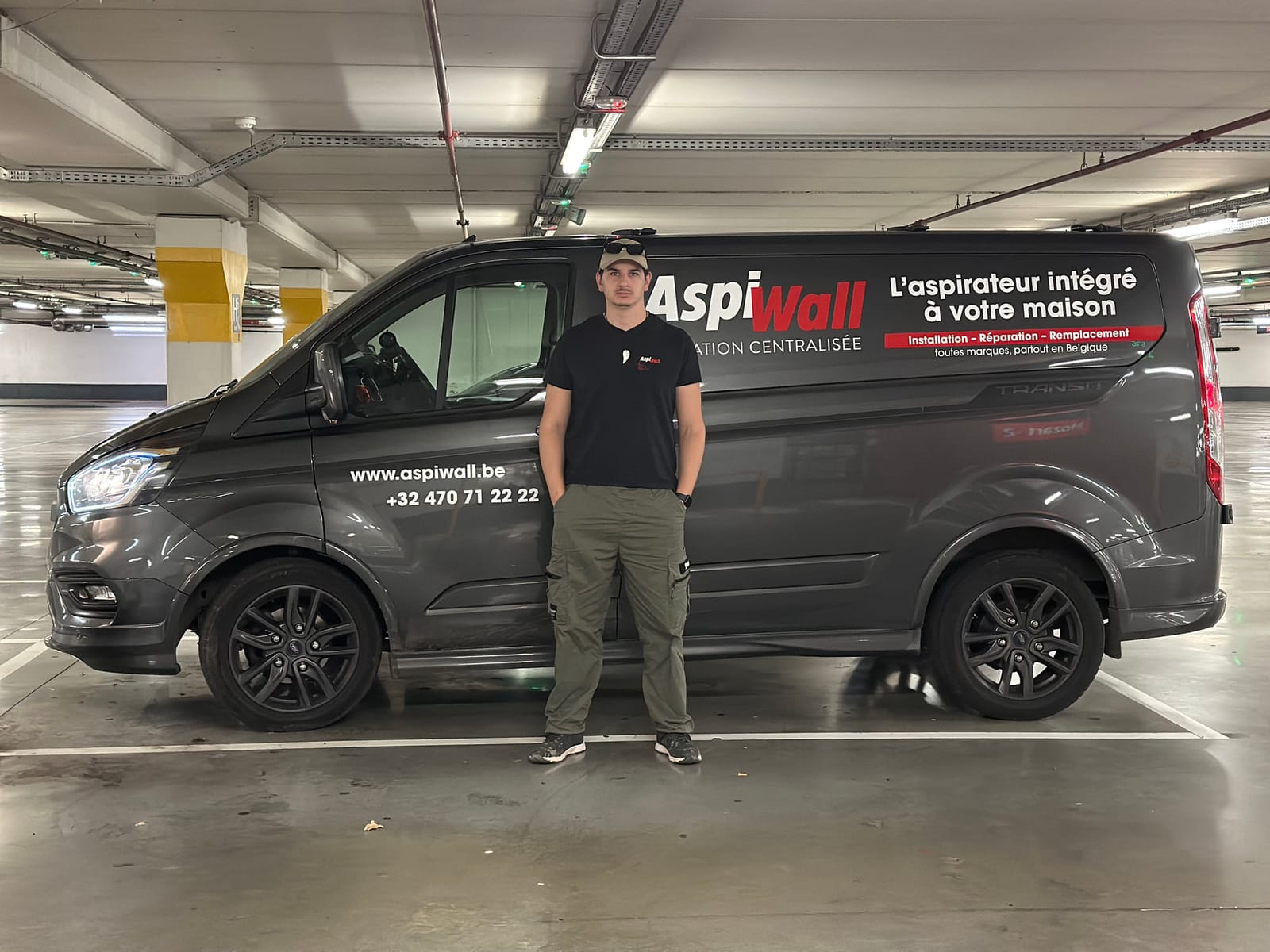
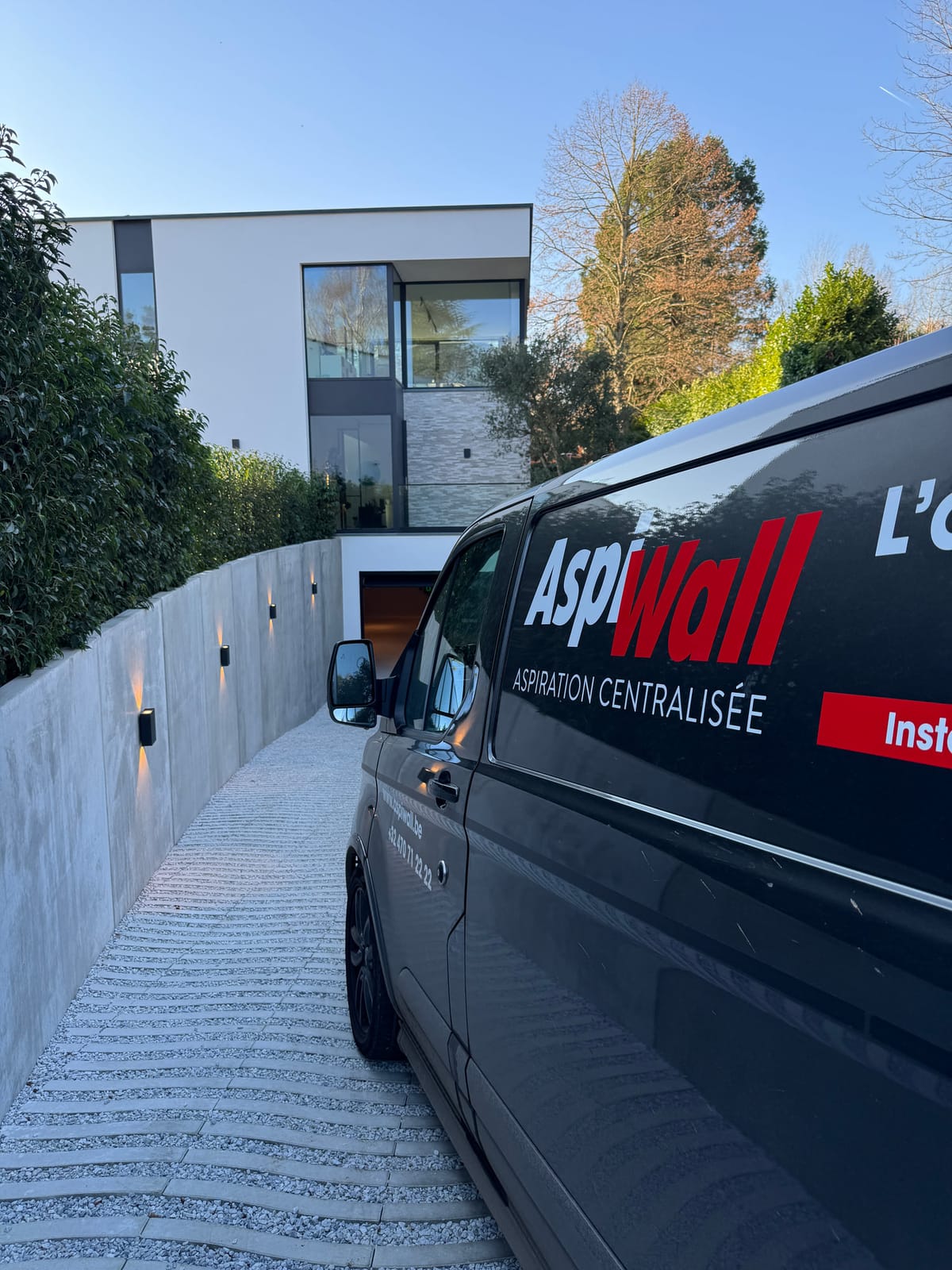
Technical study
AspiWall analyses your plans or visits on site to determine the optimal pipe routing, the number and positioning of inlets, and the appropriate central unit model.
PVC network installation
The antistatic PVC pipes are installed in the walls, floor or ceiling according to the agreed plan. Each retractable wall box is connected to the network.
Central unit & commissioning
The central unit is installed in the technical area. After connection, AspiWall tests all inlets, checks network tightness and commissions the system.
— Network routing diagrams
Complete network
routing diagrams.
For a retractable hose, the PVC pipe serves as a storage sheath: its routing is planned from the very start. A few simple principles — store the hose on a single level when possible, minimise 90° bends and ensure proper orientation — guarantee smooth retraction. A two-floor installation is possible but requires a more powerful central unit.
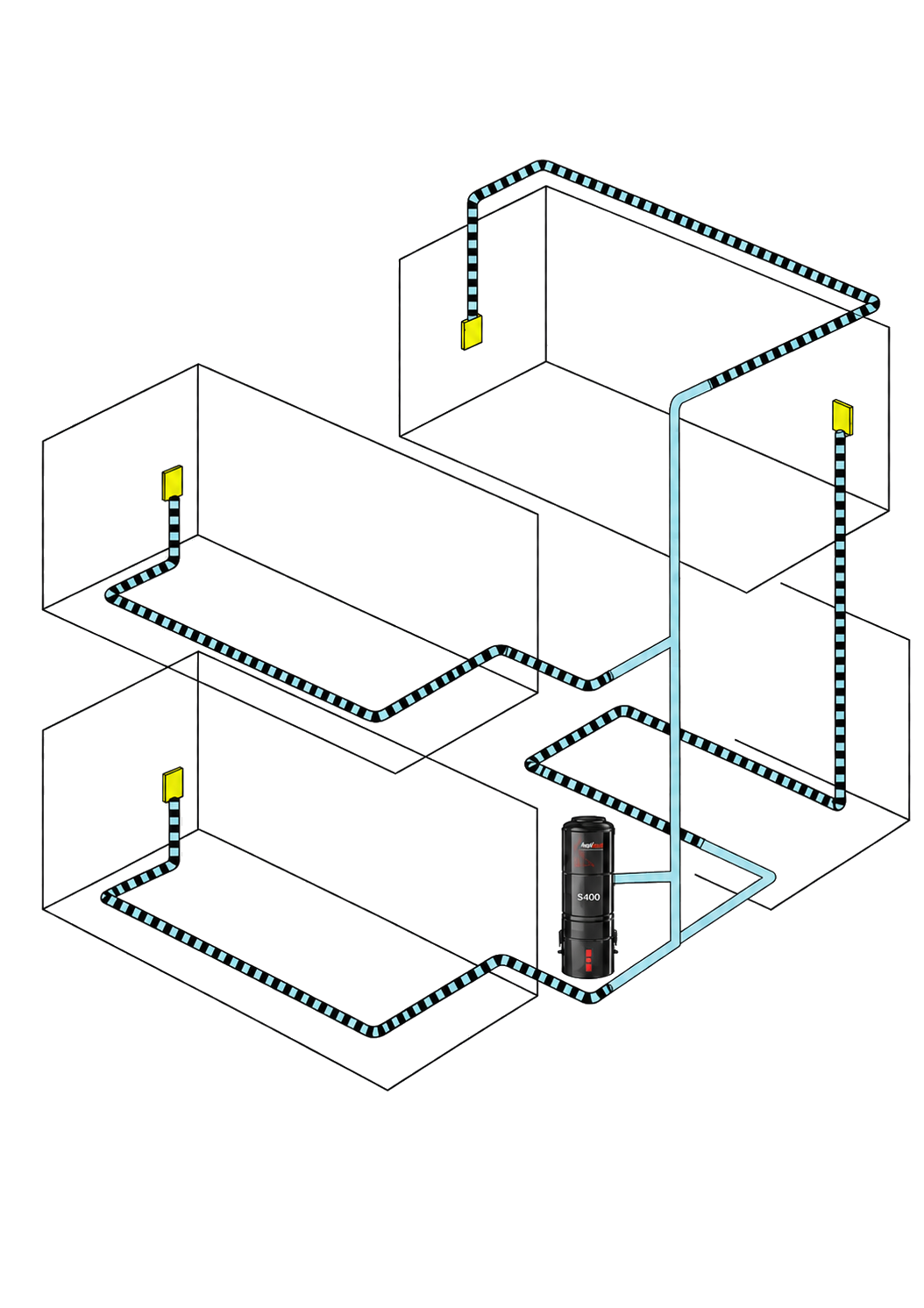
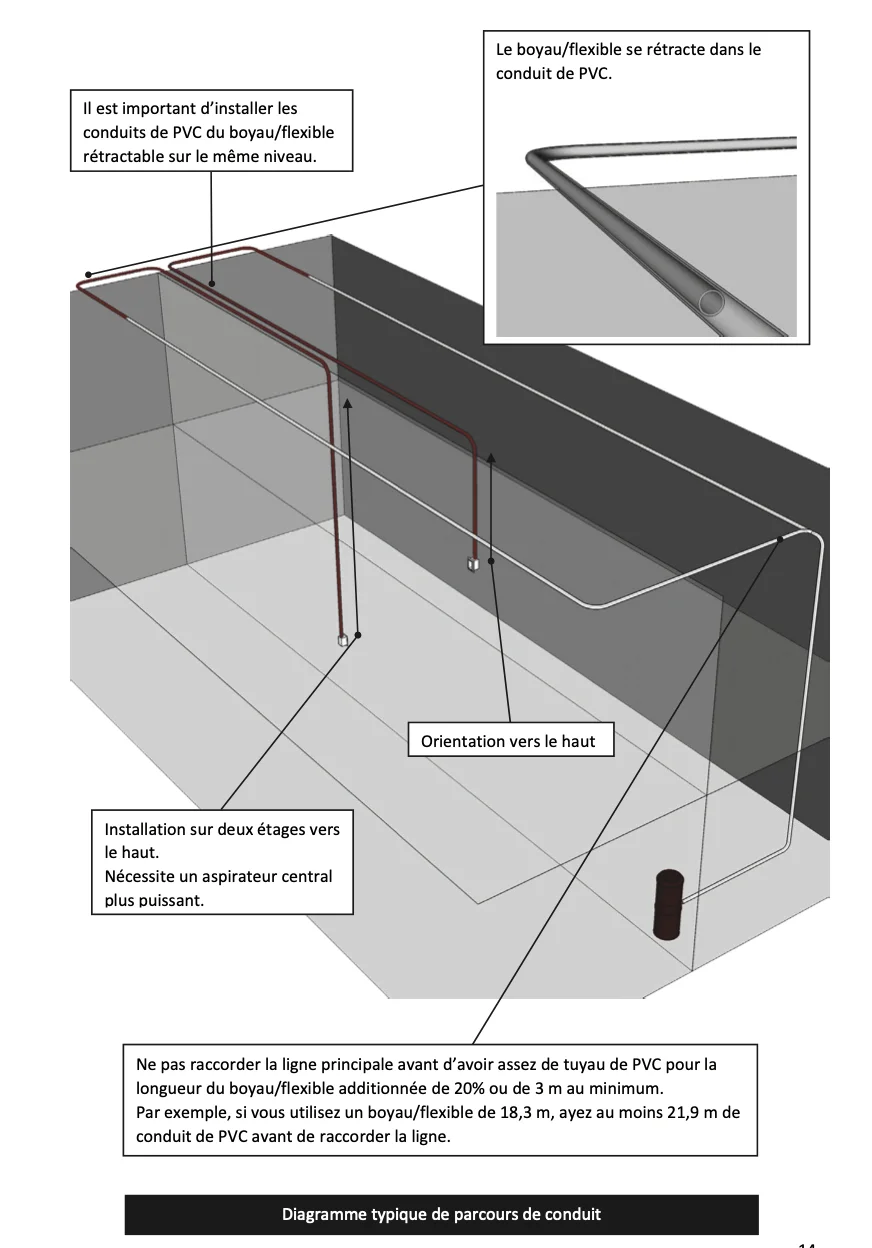
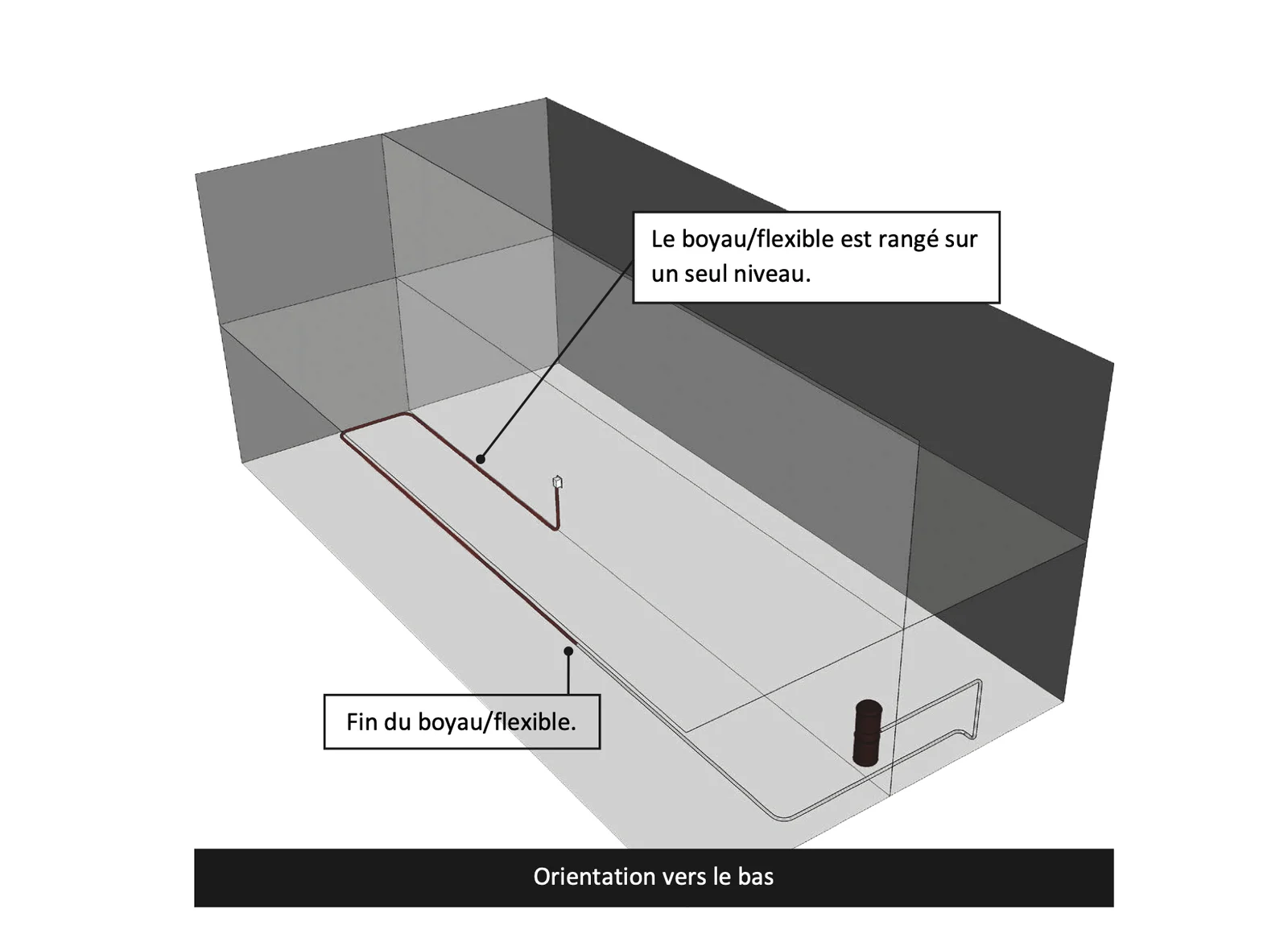
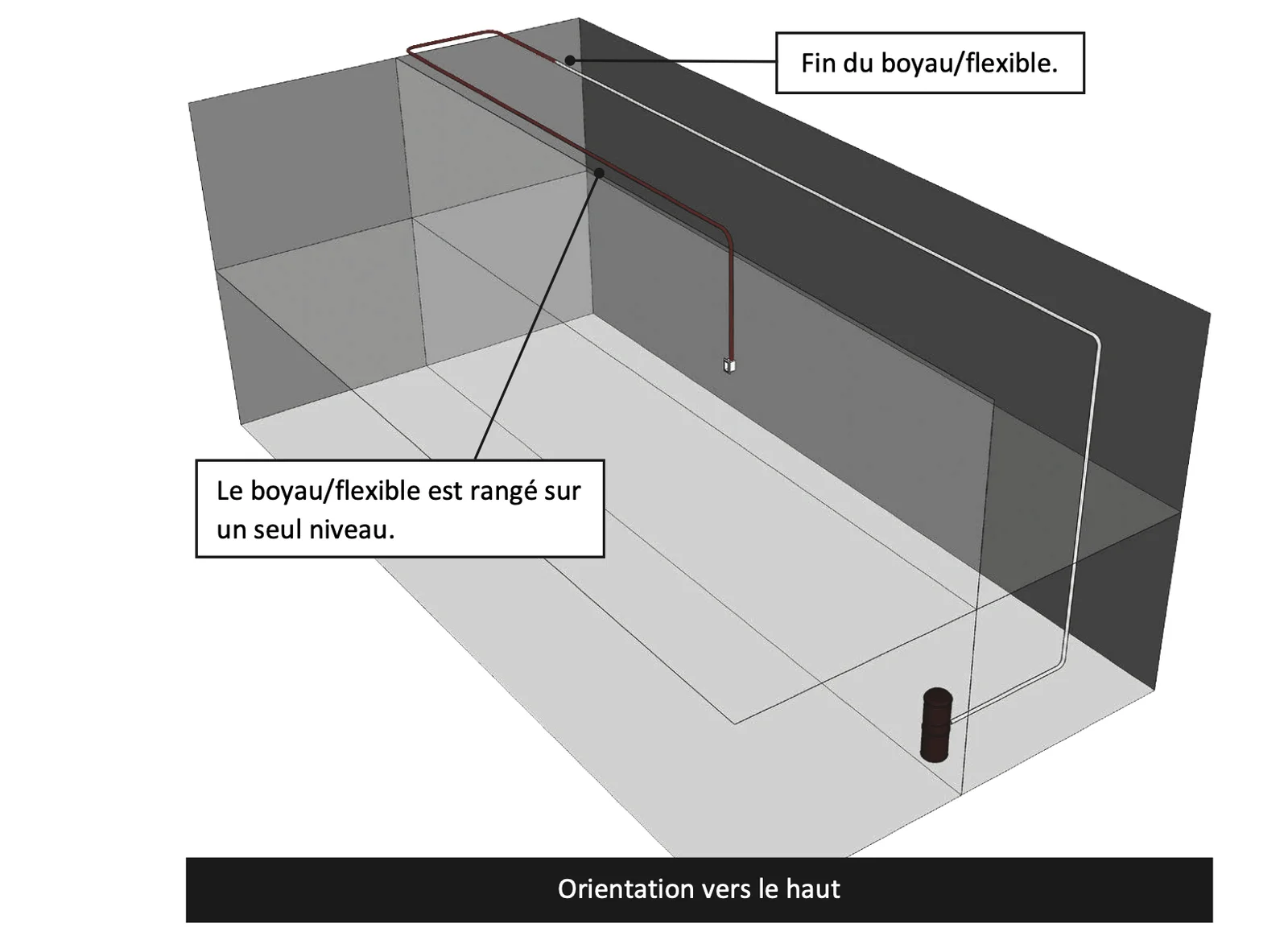
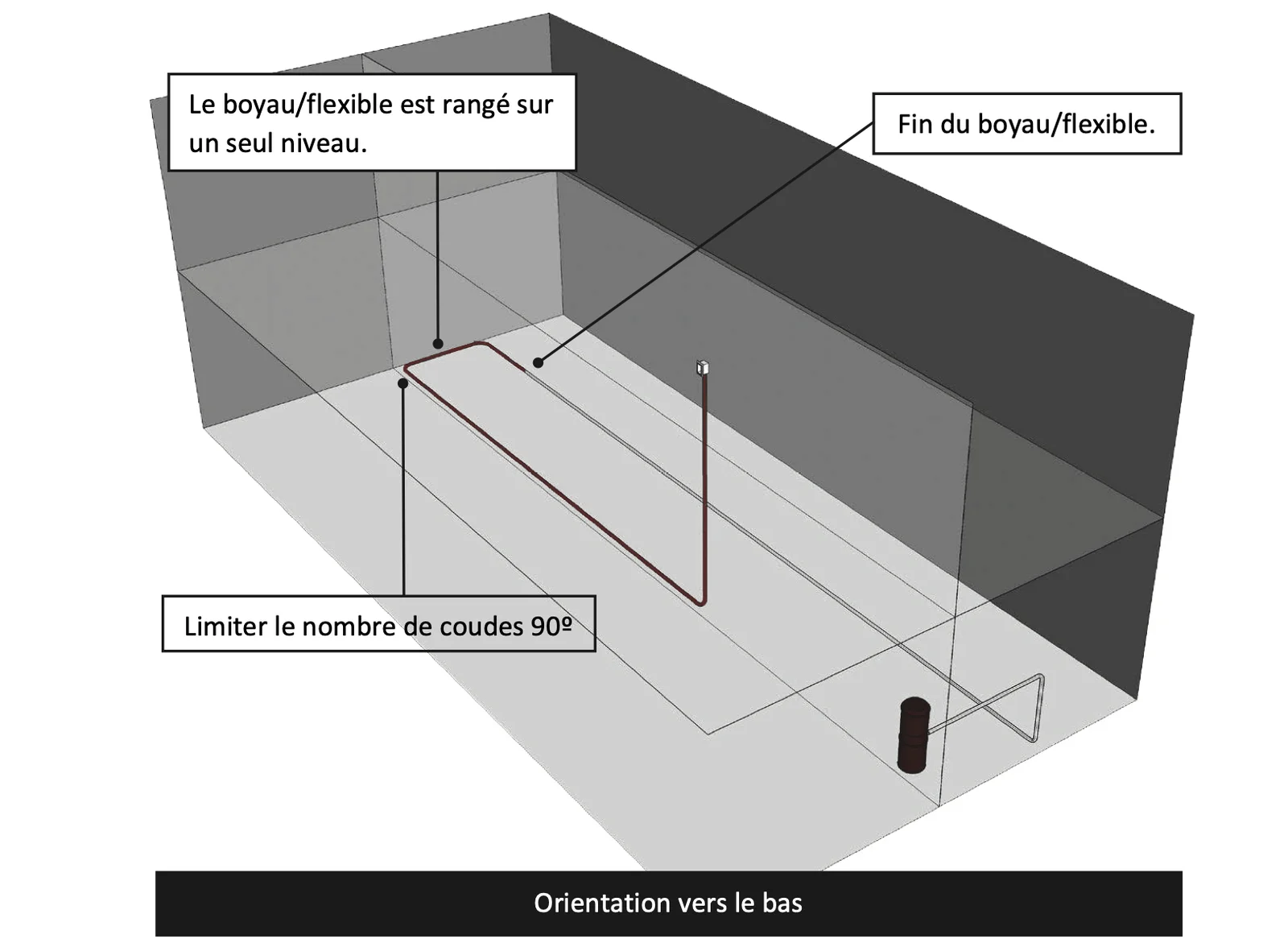
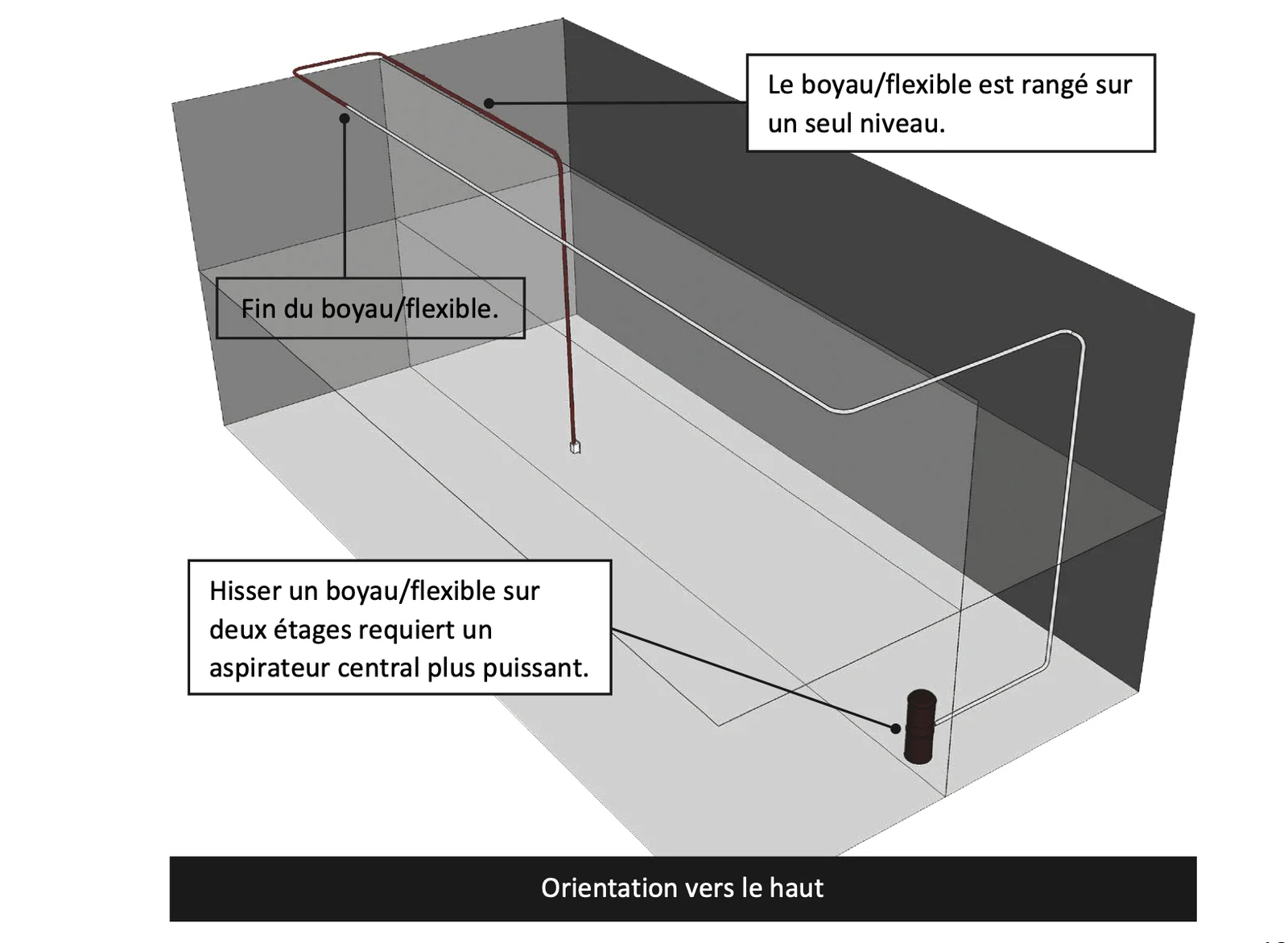
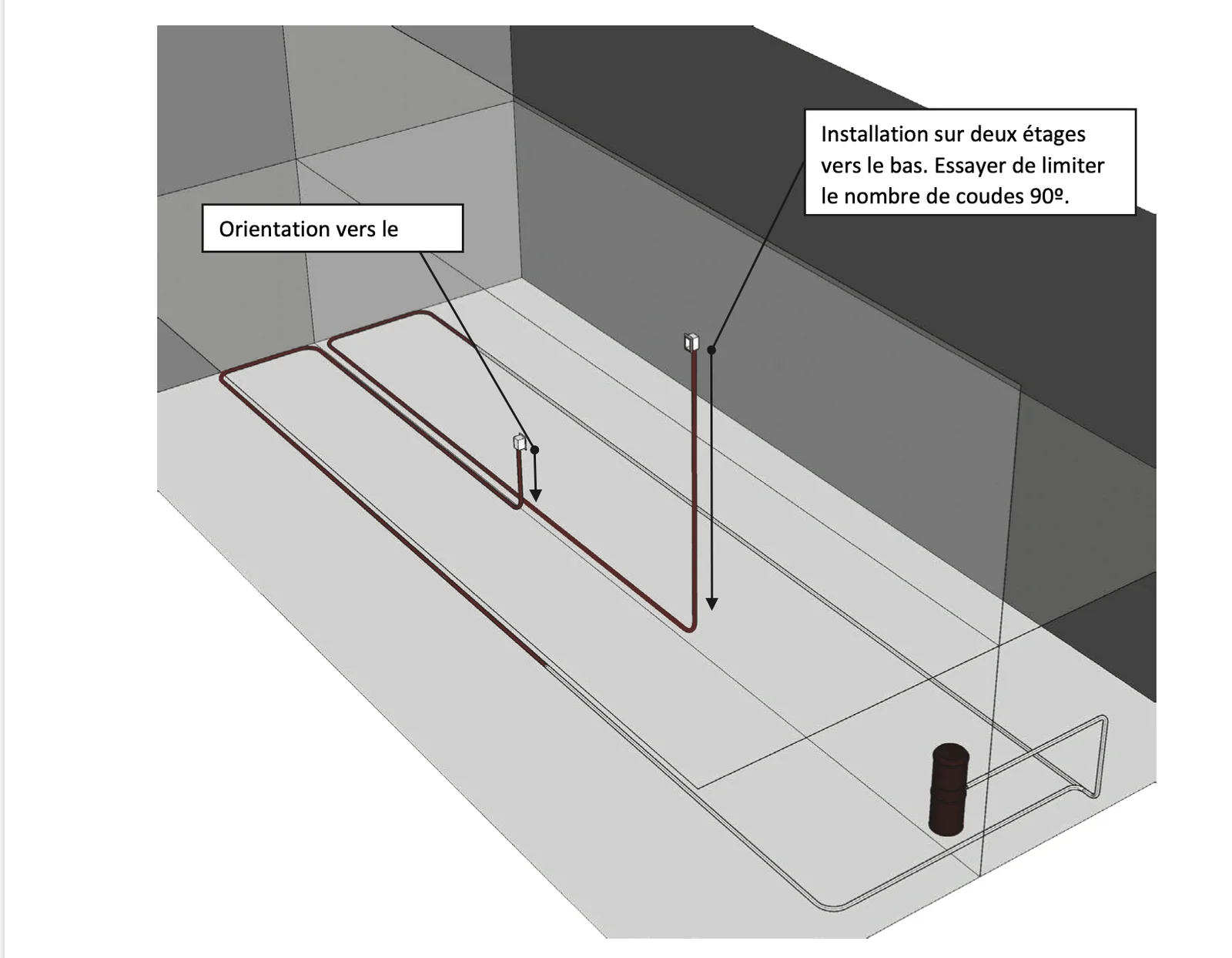
AspiWall carries out the on-site and plan-based study and validates the routing with you, whether you install yourself or the installation is entrusted to AspiWall.
— Installation advice · Network
A well-prepared
network.
Preparing the network for a retractable hose is simpler than it looks, as long as you follow the right logic: a length of 50.8 mm antistatic PVC equal to that of the hose, plus 1.5 m to 2 m of safety, then a red stop collar. Clean cuts, large-radius bends and a leak test do the rest.
AT A GLANCE
The network essentials
- →50.8 mm antistatic PVC: same length as the hose + 1.5 to 2 m
- →Red stop collar: storage marker and safety stop
- →Large-radius bends only, never small tight bends
- →Glue the male end, check the fit, deburr cleanly
- →Network laid before the other trades
- →Leak test before closing up floors and walls
— Frequently asked questions
Your questions.
Our answers.
How long does installation take?
Duration depends on the size of the building and number of inlets. For a new home, the network is installed during the shell construction phase and commissioning takes place at the end of the project. In renovation, typically allow 1 to 3 days depending on the configuration.
Is special electrical wiring required?
A sheathed low-voltage cable is required between each wall box (vacuum inlet) and the central unit, for the ON/OFF contact. This cable does not carry 220V and can be run directly. The central unit itself requires a standard electrical supply. Tip: plan a double plug socket next to the central unit — one socket for the central unit, and a second available for a potential radio receiver (an option that allows you to add a wireless start button on the vacuum handle later).
Can the system be installed yourself?
Yes, and that is indeed the choice of the vast majority of AspiWall customers. AspiWall offers a complete guided DIY kit: plan-based study, supply of professional equipment, technical explanations and advice. Post-installation check and one-off assistance available. Visit our Install yourself page.
Installation project?
AspiWall carries out the study and installation for new builds, renovations and professional buildings. Contact us for a quote.