
— Comparison
Central vacuum
or Dyson?
Cordless stick vacuum or built-in central system? Both clean, but they work in completely different ways. Here are the practical differences to help you choose.
— Technical comparison
Dyson cordless
vs. central vacuum.
The real difference isn't only suction power — it's also duration, where the exhaust air goes, and the true cost over 10 years.
| Criterion | Dyson cordless | AspiWall central vacuum |
|---|---|---|
| Suction power | 150–315 AW (boost mode, short duration) | Up to 1,354 AW continuous |
| Battery life | 20–60 min (depending on model & mode) | Unlimited — PVC network |
| Noise in the room | 70–80 dB | Very low (relocated motor) |
| Exhaust air | In the room (HEPA filtered) | At the unit, outside living spaces |
| Battery | Degrades after 2–4 years (~€200 to replace) | None |
| Bin capacity | 0.3–0.8 L — frequent emptying | Large bin — empty 1–2×/year |
| Lifespan | 3–5 years | Central unit 15–20 yrs · durable network |
| Warranty | 2 years (paid extension) | Over 10 years* |
| Stairs & hard-to-reach areas | Yes (lightweight) | Yes (light hose, network in walls) |
| Initial investment | Up to ~€999 for the latest model (V16 Piston Animal) | Complete installation — central unit 15–20 yrs, durable network |
*Parts warranty over 10 years: 5 years at 100% + 5 years at 50%, at no extra cost beyond the 2-year EU legal warranty.
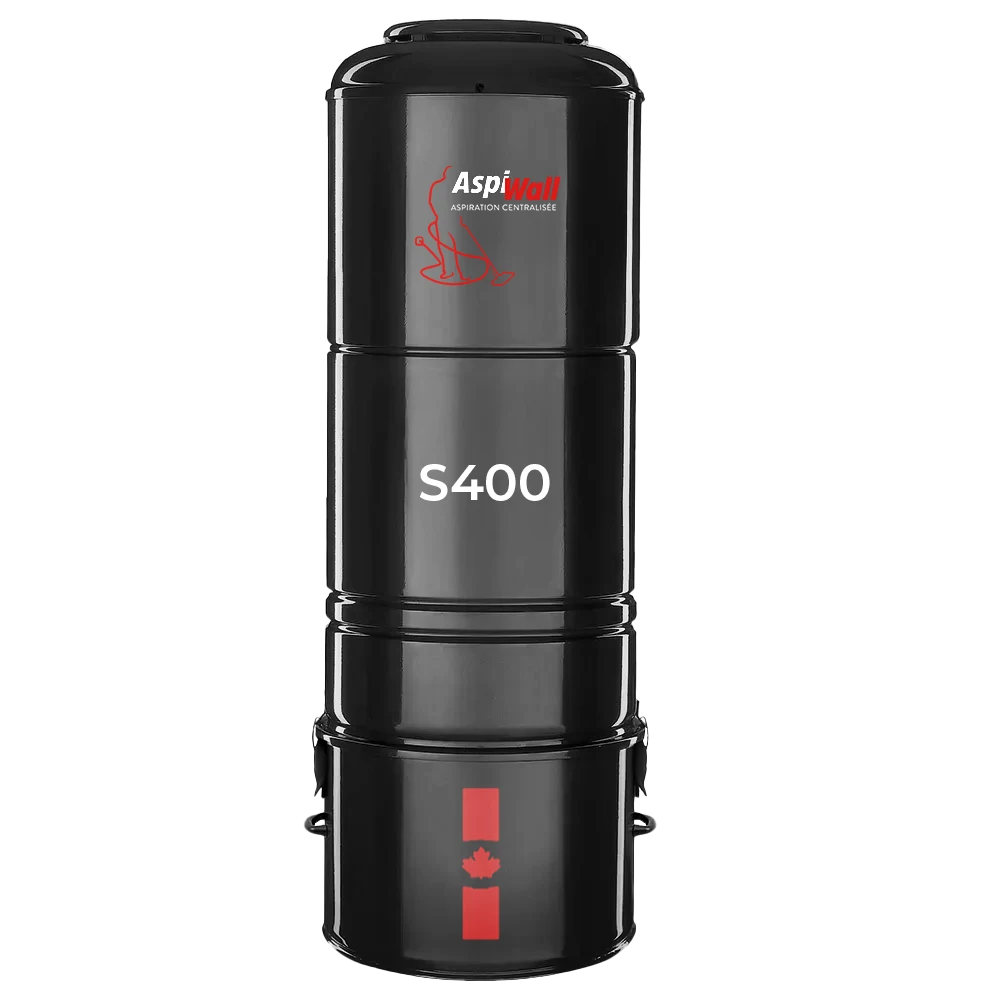
— Strengths and limits
Two very different
philosophies.
Dyson cordless
- −Light and convenient for quick tasks
- −No installation required
- −Limited battery life — recharge between sessions
- −Battery degrades over time
- −Filtered air exhausted back into the room
- −Small bin, frequent emptying
- −Replacement every 3–5 years
- −Reduced power in standard battery mode
AspiWall central vacuum
- →Constant power up to 1,354 AW, no time limit
- →No battery to charge or replace
- →Relocated motor — silence in living spaces
- →Exhaust air directed to unit, outside living spaces
- →Large bin — empty 1–2×/year only
- →PVC network: no wearing parts
- →Durable installation: central unit 15–20 yrs, PVC network with no wear
- →Lightweight hose, inlet in every room
— Keep in mind
The limits of
each solution.
Dyson's real battery life
In boost mode (maximum power), battery life drops to 8–15 minutes depending on the model. Cleaning a floor, stairs and a bathroom: the battery may not last. You need to recharge or buy a spare battery.
Central vacuum requires installation
Unlike the Dyson, central vacuum is installed in the building — PVC pipe network, wall inlets, unit in a utility room. It's an upfront investment to plan, ideally during construction or renovation.
Dyson's true cost over 10 years
The latest model, the V16 Piston Animal, costs ~€999. Add battery replacement (~€200), then unit replacement after 3–5 years (~€1,000 again): over €2,000 over 10 years. Central vacuum is a one-time investment — the central unit lasts 15–20 years and the PVC network is durable.
— Decision guide
When to choose
which solution?
Dyson suits you if…
- →You rent and cannot install a PVC network
- →You live in a studio or small flat (< 60 m²)
- →You only clean occasionally or in short bursts
- →Your budget does not currently allow a full installation
- →You need mobility outside the home (car, terrace)
AspiWall central vacuum suits you if…
- →You own a house or apartment
- →You vacuum regularly and want everyday comfort
- →Noise and air exhaust in the rooms bother you
- →You have carpets, rugs or floors that require real power
- →You think long-term and prefer durable equipment
- →You want to avoid recharging and repeated purchases
— Frequently asked questions
Your questions. Our answers.
Is a Dyson cordless as powerful as a central vacuum?
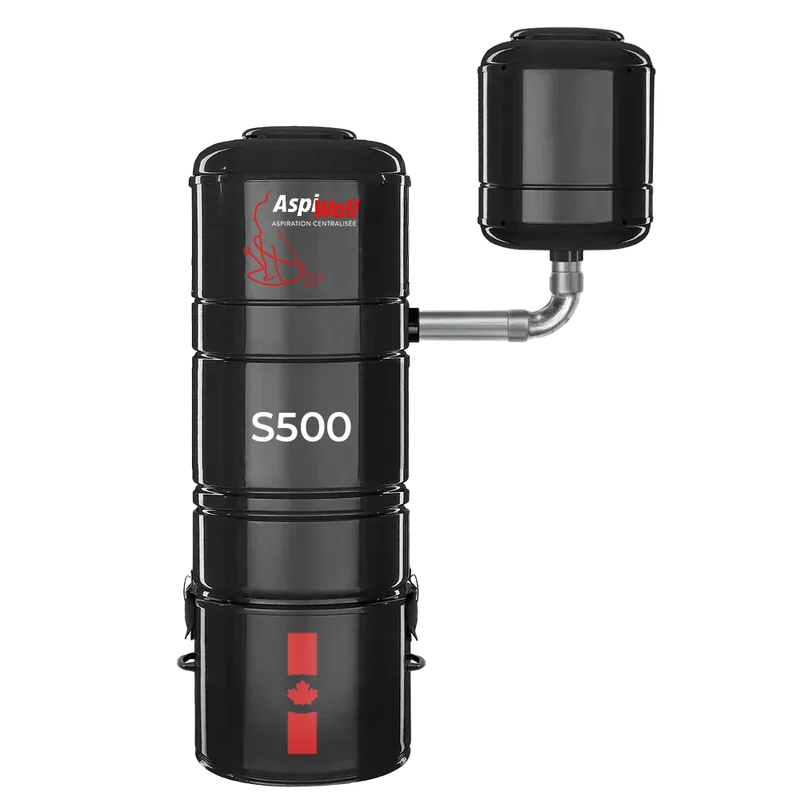
No. Even the most powerful Dyson to date — the V16 Piston Animal with its 900 W motor — peaks at 315 AW, and only in boost mode, where runtime drops to a few minutes. Most models stay between 150 and 280 AW. The AspiWall S500 central vacuum delivers 1,354 AW continuously, with no battery or time limit: more than four times the power of the best Dyson, all the time.
Does Dyson exhaust dust back into the room?
Yes. Like any conventional vacuum, Dyson sucks, filters and exhausts air back into the room you are cleaning. HEPA filtration retains most fine particles, but the air has to go somewhere. With AspiWall central vacuum, the exhaust air is directed to the unit installed outside the living spaces — it never comes back into the area you just cleaned.
How does a Dyson's lifespan compare to a central vacuum?
A cordless Dyson rarely lasts more than 3–5 years without a part being replaced: the battery degrades after just 2–4 years of use (replacement ~€200) and eventually forces you to replace the whole unit. On warranty, Dyson covers the machine for 2 years and any extension is paid. With AspiWall, the PVC network has no wearing parts and lasts the life of the building; the central unit carries a parts warranty over 10 years at no extra cost, and is designed to last 15–20 years.
Does the AspiWall warranty cost extra?
No. AspiWall central units come with a parts warranty over 10 years (5 years at 100% + 5 years at 50%) at no extra cost — far beyond the 2-year EU legal warranty. With Dyson, extending cover beyond the 2 legal years is usually a paid option.
Is Dyson suitable for homes with thick carpets?
Dyson models with a motorised head vacuum carpets reasonably well. However, their limited power (economy mode) and small brush head show limits on thick fitted carpets or carpeted stairs. AspiWall central vacuum offers constant power and dedicated brushes suited to every surface.
Can you have both — a Dyson and a central vacuum?
Yes. Some owners keep a cordless stick vacuum for quick clean-ups and areas without a central inlet (car, terrace). AspiWall central vacuum remains the solution for thorough whole-home cleaning, deep surface work and stairs.
Is central vacuum louder than Dyson?
In the living spaces, no. Dyson produces 70–80 dB right next to you. The AspiWall unit is installed in a utility room (garage, basement): in the rooms, you only hear the quiet airflow of the hose. Motor noise stays confined to the utility room.
Ready to switch to central vacuum?
Send your floor plans and get a personalised quote. AspiWall serves all of Belgium.